








Patellar Tendon Repair is a surgical solution for patients who experience sudden knee weakness, loss of leg extension, or complete inability to straighten the knee after injury. This condition often disrupts daily movement, especially for people who depend on physical activity for work, sports, or routine mobility. Patellar Tendon Repair focuses on restoring the connection between the kneecap and the shinbone so the knee can regain strength and controlled motion.
Patients from Bicol, including nearby areas such as Naga City, Legazpi City, and Camarines Sur, often seek specialized care after experiencing this type of injury. Early evaluation and proper surgical planning play a major role in recovery outcomes.
Understanding Patellar Tendon Function and Injury
The patellar tendon connects the kneecap (patella) to the tibia. This structure works closely with the quadriceps muscles to extend the knee, which is required for walking, climbing stairs, standing up, and jumping.
A rupture disrupts this connection, leading to significant loss of knee control. Patellar Tendon Repair becomes necessary when the tendon tears fully or when function is severely compromised.
Common causes of injury include sudden landing from a jump, direct trauma to the knee, sports-related collisions, or accidents involving a forceful bend in the knee. Some individuals may also experience weakening of the tendon over time, which increases the risk of rupture.
Signs That May Indicate the Need for Patellar Tendon Repair
Patients who may need Patellar Tendon Repair often report a sudden event followed by immediate difficulty in moving the leg. Symptoms may include:
- Sharp pain at the front of the knee
- Inability to straighten the leg after injury
- Swelling around the kneecap area
- A feeling of instability when attempting to stand
- Difficulty bearing weight on the affected leg
- A noticeable change in kneecap position in severe cases
These symptoms often require urgent medical evaluation. Delaying care may affect long-term knee function and recovery outcomes.
Causes and Risk Factors Linked to Patellar Tendon Repair Cases
Patellar Tendon Repair is commonly required after high-impact injuries. Several factors increase the likelihood of tendon rupture:
- Participation in basketball, volleyball, football, or similar sports
- Sudden jumping or landing movements without proper control
- Direct trauma from falls or accidents
- Repetitive stress on the knee joint
- Degenerative changes in tendon tissue
- Previous knee injuries affecting stability
Manual labor tasks that involve lifting, climbing, or sudden directional changes may also increase risk. Understanding these factors helps patients recognize when knee pain or weakness may indicate a more serious condition.
Diagnosis Before Patellar Tendon Repair
Accurate diagnosis is essential before proceeding with Patellar Tendon Repair. A thorough evaluation helps determine the severity of the injury and the best surgical approach.
Assessment often includes:
- Physical examination of knee movement and strength
- Review of injury history and symptom onset
- Imaging studies such as X-ray to check bone alignment
- MRI scans to evaluate tendon damage and surrounding tissues
These steps help confirm whether the tendon is partially or completely torn and guide surgical planning.
Patellar Tendon Repair Surgical Procedure
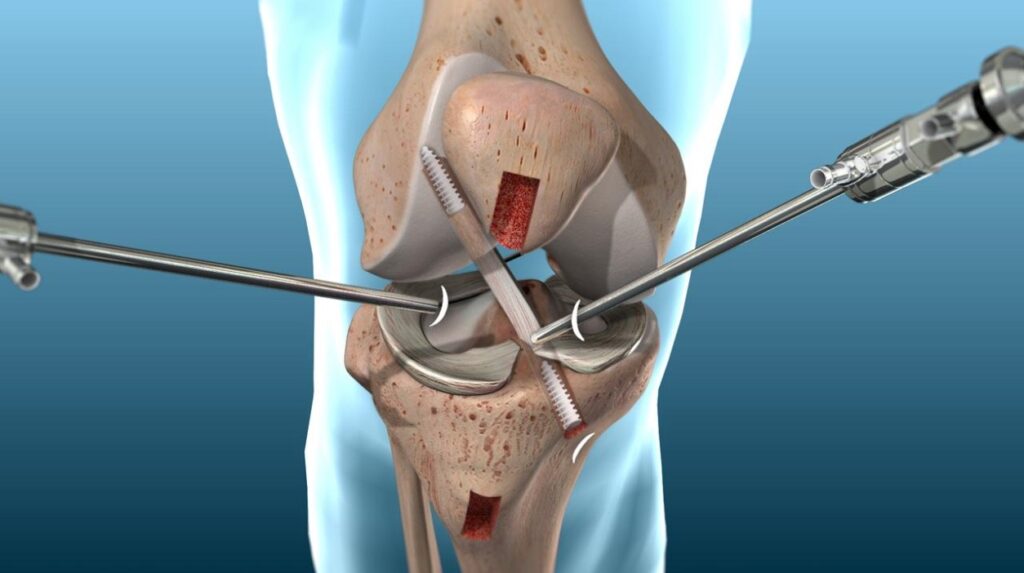
Patellar Tendon Repair focuses on reattaching the torn tendon to restore knee extension function. The procedure is performed with careful alignment to ensure proper healing and stability.
During Patellar Tendon Repair, the surgeon repositions and secures the torn tendon to its attachment point on the kneecap or tibia using specialized fixation techniques. In more severe cases, reinforcement methods may be added to support healing and improve strength.
The primary goals of Patellar Tendon Repair include:
- Restoring the ability to straighten the knee
- Rebuilding structural connection between tendon and bone
- Improving knee stability for walking and standing
- Supporting long-term joint function
Each Patellar Tendon Repair procedure is tailored based on injury severity and patient condition.
Recovery After Patellar Tendon Repair
Recovery following Patellar Tendon Repair involves a structured rehabilitation process designed to protect the surgical repair while gradually restoring movement.
The early phase focuses on protecting the knee and reducing strain on the repaired tendon. A brace may be used to maintain alignment and prevent unwanted movement.
As healing progresses, controlled motion exercises begin under supervision. These exercises help restore flexibility and prevent stiffness.
Later stages of recovery after Patellar Tendon Repair focus on strengthening the muscles surrounding the knee. This phase plays an important role in regaining stability and functional movement.
Recovery time varies depending on injury severity, overall health, and commitment to rehabilitation. Full return to high-impact activities requires clearance from the treating specialist.
Possible Risks and Post-Surgical Care
Like any surgical procedure, Patellar Tendon Repair carries potential risks. These are generally minimized through proper technique and guided recovery.
Possible concerns include:
- Joint stiffness during healing
- Temporary swelling or discomfort
- Risk of re-injury if rehabilitation steps are not followed
- Infection at the surgical site
Post-surgical care includes regular follow-up consultations, adherence to rehabilitation programs, and gradual return to physical activity. Proper care supports better long-term outcomes after Patellar Tendon Repair.
Patellar Tendon Repair at Lao Orthopedic Services
Patellar Tendon Repair is available through specialized orthopedic care provided by Lao Orthopedic Services. The clinic focuses on treating complex knee injuries, including tendon ruptures that require surgical repair and structured rehabilitation.
The medical team provides care for patients from different parts of Bicol, including Naga City, Legazpi City, and surrounding provinces. Each case of Patellar Tendon Repair is evaluated carefully to match the appropriate surgical approach and recovery plan.
Services include advanced care for sports injuries, joint reconstruction, and arthroscopic procedures that support accurate diagnosis and treatment.
About Dr. Lawrence Lao
Dr. Lawrence Lao brings extensive experience in orthopedic care, with 16 years of medical practice focused on restoring mobility and function.
His training includes Orthopedic Traumatology at East Avenue Medical Center, along with advanced subspecialty training in Hip and Knee Reconstruction in Taiwan and Sports Surgery and Arthroscopy in Thailand. His background supports complex procedures such as Patellar Tendon Repair, particularly for patients with sports-related or trauma-related knee injuries.
Why Early Treatment Matters for Patellar Tendon Repair
Early medical attention after injury improves the chances of a successful Patellar Tendon Repair. Delays may lead to muscle weakening, joint stiffness, and more complicated recovery.
Patients who seek care promptly often experience:
- Better restoration of knee strength
- Improved joint alignment during healing
- More predictable recovery progress
- Lower risk of long-term movement limitations
Timely intervention plays a central role in restoring knee function after tendon rupture.
Living After Patellar Tendon Repair
Life after Patellar Tendon Repair gradually returns to normal with consistent rehabilitation and follow-up care. Daily activities such as walking, climbing stairs, and light exercise become easier as strength improves.
Patients recovering from Patellar Tendon Repair are guided through progressive activity levels to ensure safe healing. Return to sports or physically demanding work depends on recovery progress and medical clearance.
Frequently Asked Questions About Patellar Tendon Repair
What is Patellar Tendon Repair?
Patellar Tendon Repair is a surgical procedure that reconnects a torn tendon linking the kneecap to the shinbone, restoring knee extension and stability.
How long does recovery take after Patellar Tendon Repair?
Recovery time varies, but most patients undergo several months of rehabilitation before returning to full physical activity.
Can walking return after Patellar Tendon Repair?
Walking returns gradually after surgery, starting with assisted movement and progressing as strength improves.
What causes the need for Patellar Tendon Repair?
Common causes include sports injuries, falls, accidents, and sudden stress placed on the knee joint.
Is physical therapy necessary after Patellar Tendon Repair?
Yes, rehabilitation plays a major role in restoring strength, flexibility, and function after surgery.
Who should consider Patellar Tendon Repair evaluation?
Individuals with sudden knee injury, inability to straighten the leg, or severe knee weakness should seek medical evaluation as soon as possible.